The 2023 Sweat Science Holiday Book List
If you buy through our links, we may earn an affiliate commission. This supports our mission to get more people active and outside.Learn about Outside Online's affiliate link policy
(Photo: Courtesy the Publishers)
My favorite quote about books is the one that was emblazoned on shopping bags from the McGill University bookstore when I was an undergrad there in the 1990s, from the eighteenth-century German physicist Georg Christoph Lichtenberg: “A book is a mirror: if an ass peers into it, you can’t expect an apostle to peer out.” I always keep that in mind whenever I give book recommendations, because then I can claim that it’s your fault, not mine, if you don’t like the picks.
That said, the books below are all ones that have brought me pleasure this year. I hope you’ll find something there to entertain you during the upcoming holidays—or at least to help you check off your holiday shopping.
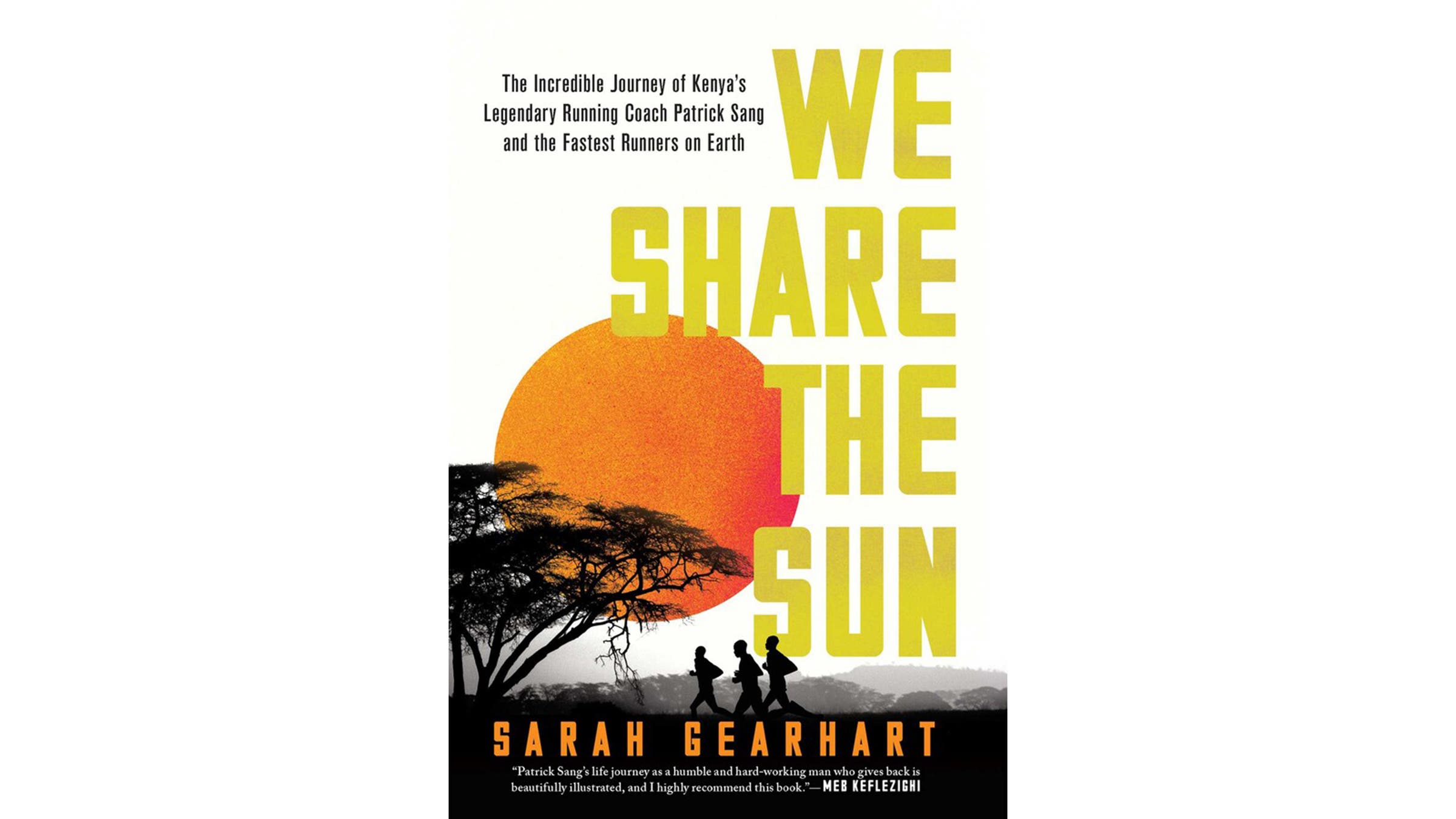
We Share the Sun, by Sarah Gearhart
No, this isn’t a book about Eliud Kipchoge (though now that you mention it, it’s odd that there isn’t a Kipchoge biography out there yet). It’s a book about Kipchoge’s mentor and coach, Patrick Sang, the 1992 Olympic steeplechase medalist who has been the understated presence behind all of Kipchoge’s greatest feats and the force guiding one of the greatest training groups the world has ever seen. Like Ed Caesar’sTwo Hoursand Michael Crawley’sOut of Thin Air, Gearhart’s reporting offers running fans the rare treat of a truly three-dimensional portrait of the East African runners who dominate the sport. We get intimate looks at Kipchoge, Geoffrey Kamworor, and newly dominant megastar Faith Kipyegon. But Sang himself is the center of the story, and he’s an interesting enough character to sustain it.
Psych, by Paul Bloom
If you live in this world for long enough, you inevitably wind up with some sort of hazy sense of who Sigmund Freud was and what his ideas were all about. Same with concepts like Skinner boxes and Piaget’s stages of child development and the Marshmallow Test. But if, like me, you managed to skate through college without ever taking Psych 101, you probably don’t have a clear picture of how all these ideas fit together. This is whatPsychoffers: a highly readable and entertaining tour of modern psychology, based on Bloom’s Yale survey course. I first encountered Bloom’s writing in his 2021 bookThe Sweet Spoton why people enjoy doing superficially unpleasant things (a topic tailor-made for endurance athletes), and his new book is similarly thought-provoking.
Outsider, by Brett Popplewell
I’ve always liked stories about people who go live in the wilderness (likeThe Bushman’s Lair, whichI recommendeda couple of years ago). I’m also fond of books about running and runners. This one ticks both boxes: it’s about an old man who lives in a school bus in the forests of British Columbia, runs 5,000 miles a year on mountain trails, and emerges periodically to run extreme ultramarathons. Who is he? Well, that’s what Popplewell set out to discover, and it turns out to be a pretty wild tale that includes stints as a stuntman, pioneering the sport of extreme skiing, and a cameo in the James Bond filmGoldfinger.
Master of Change, by Brad Stulberg
I’ve been following Stulberg’s writing for many years now, and one of the things I enjoy most is the way he integrates far-flung bodies of knowledge. On one page, you’ll be learning about the Sanskrit wordviparinama-dukkha(“the dissatisfaction that results from clinging amidst change”); on the next you’ll be discovering the ideas of Thomas Kuhn or the mountaineering exploits of Tommy Caldwell or the cognitive neuroscience theories of Andy Clark. His newest book (excerpted recently in Outside) argues for the cultivation of “rugged flexibility,” the ability to bend without breaking in times of change—which, as he points out, is pretty much all the time.
Wayfinding, by M. R. O’Connor;From Here to There, by Michael Bond
I’ve been fascinated by the science of navigation ever since I received a fellowship from the Canadian Institutes of Health Research to researchthis 2009 feature. How do we find our way through the world? What’s the difference between navigating by landmarks or cognitive maps? Is the rise of GPS changing how we relate to the world? I recently discovered two semi-recent books that delve into these questions:Wayfinding, from 2019, andFrom Here to There, from 2020. They’re both excellent. They cover some of the same ground, and talk to some of the same people, but they each bring unique perspectives and find distinct avenues to explore.Wayfindingis perhaps the more lyrical and digressive of the two, whileFrom Here to Theretells its story more linearly. But honestly, it’s hard to choose between them. If you like one, you’ll probably like both.
Secrets of Giants, by Alyssa Ages
Alyssa Ages is, as the cover of her book tells us, a “strongman competitor and endurance athlete.” That’s a curious combination, you might think. She was already an experienced marathoner and triathlete when she took up strongman competition, familiar with all the books that describe the “transcendent experience” of running long distances. There are fewer books that wax poetical about the joys of lifting heavy things, and this book is in part her attempt to understand why she is drawn to do it and what she gets out of it—and, ideally, to develop a better explanation of her pursuit for her three-year-old daughter. She makes a compelling case that, just as running is about more than reaching the finish line, strength training is about far more than just putting on muscle.
Untethered, by Dave Proctor
Last year, Proctor set a new record for running across Canada, averaging more than 65 miles per day to cover 4,448 miles in just over 67 days. The record came four years after a highly publicized but disastrously unsuccessful attempt in 2018, which he had to abandon due to injury. All of that I knew from thenews reportsI read at the time, but I didn’t know anything about the backstory and details of the record run. Turns out it was pretty grueling: throw in a mid-run bout of COVID, a stress fracture, and a bunch of personal challenges, and it starts to sound even less fun than I’d imagined. The book provides a detailed window into what this sort of endeavour involves: some of the most interesting passages describe the herculean logistical efforts of his crew.
Climbing Free, by Lynn Hill;Ignite, by Andre De Grasse;The Master, by Christopher Clarey
If you’re looking for a sports biography, here are three that I enjoyed this year. A climbing partner lent me her copy of Hill’s 2002 autobiography, and it ended up being one of my favorite reads of the year. De Grasse’s new book is less of an autobiography and more of an investment in a future career of motivational speaking, but despite this it manages to be a surprisingly introspective and self-aware glimpse into the mind of the once and (speaking as a fellow Canadian, hopefully) future Olympic champion. Clarey was one of my favorite writers in the now-defunctNew York Timessports section, and you should read his 2021 biography of Roger Federer now, so that you’re ready for his Rafael Nadal book,The Warrior, when it comes out next May.
The Topeka School, by Ben Lerner
Whenever I try to explain what a novel is about, I think of Woody Allen’s quip about taking a speed-reading course: “I was able to readWar and Peacein 20 minutes. It’s about Russia.” In a similar vein,The Topeka Schoolis a coming-of-age novel about a high-school debate star in Kansas in the mid-1990s. The fact that I was also a nineties high schooler might help explain why it was my favorite fiction read of the year, but it’s a much broader and more ambitious book than that makes it sound, in a sense trying to explain the tumult of 2019 (the year it was published, when it also picked up an armful of awards) by looking back a few decades.
I’ll finish by teasing a couple of books that I’m looking forward to next year.Unbound: Unforgettable True Stories from the World of Endurance Sportsis a collection of endurance tales by one of the top feature writers in the genre, Bill Donahue. (I wrote the foreword, and can attest that it’s a fantastic read.)Not Too Late: The Power of Pushing Limits at Any Ageis Gwendolyn Bounds’s account of discovering obstacle racing in her mid-forties and transforming herself from a sedentary office worker to an age-group world championships competitor. Both books are out in June and available for pre-order now.
For more Sweat Science, join me onTwitterandFacebook, sign up for theemail newsletter, and check out my bookEndure: Mind, Body, and the Curiously Elastic Limits of Human Performance.