Can Alex Honnold Convince Americans to Care About Greenland?
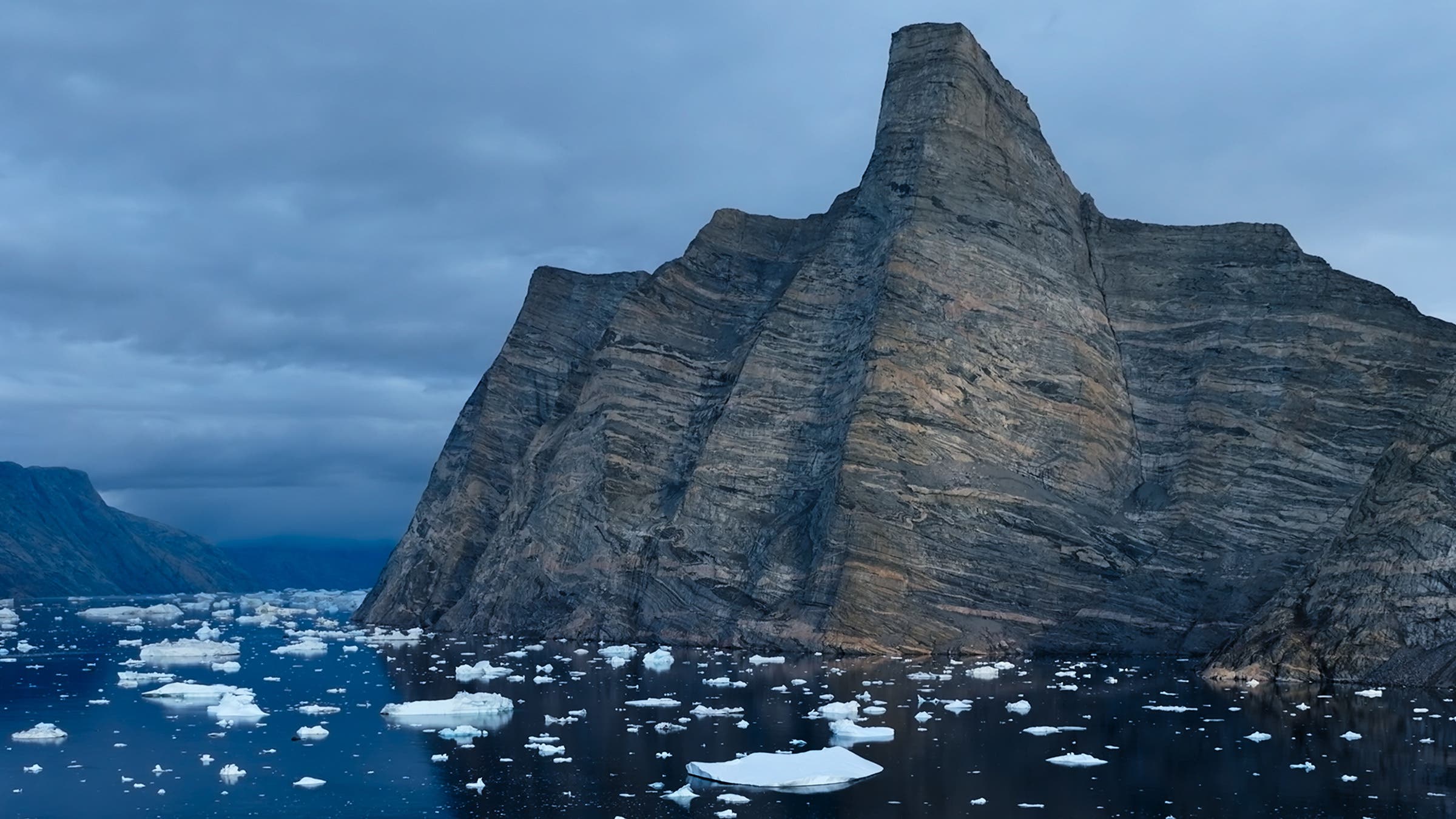
Alex Honnold climbed a massive cliff in Greenland in 2022.(Photo: National Geographic/Matt Pycroft)
Say it with me:Ing-muh-cor-tuh-lack.No, it’s not an itchy skin disorder or the latest Industrial rock band from Germany. Spraying Ingmikortliaq on your bathtub won’t kill the mildew. What the hell is Ingmikortilaq? If you answered “a sheer 3,750-foot rock face above an icy fjord in a remote part of Greenland,” well, congratulations, you are correct.
Ingmikortilaq is the central focus ofAlex Honnold’slatest adventure series, calledArctic Ascent with Alex Honnold,which airs onNational Geographic’s cable TV channelthis coming Monday, February 5. The three-partclimbingdocumentary chronicles Honnold’s 2022 expedition to become the first person to scale the the massive wall, which is approximately 1,000 feet taller than Yosemite’s famedEl Capitan.
To reach the monolithic cliff, Honnold and his expedition teammates must first cross a section of Greenland’s ice cap, ascend a shorter but equally terrifying peak, and then boat up a fjord while dodging massive bergs. Along the way they help a glaciologist named Heidi Svestre conduct on-the-ice climate research to investigate how rising temperatures are ravaging the country’s imperiled rivers of ice.
I watched an advanced screeners forArctic Ascent’sthree 45-minute episodes over the course of several early mornings and found it to be a compelling, if occasionally sleepy, watch. Yes, there are stunning drone shots of Honnold and British climber Hazel Findley clinging to Ingmikortliaq’s massive face. In the first episode, high-definition cameras show Honnold rappelling into a blueish-green glacial moulin—a drainage hole that funnels water through the ice—to collect scientific samples for climate research. And the narration from Svestre helps explain the geologic dynamics at play in Greenland’s ice caps, and why they matter to the rest of the world.
But the actual storyline thatArctic Ascentfollows is well-trodden territory in today’s world of adventure filmmaking. The adventurers go from point A to point B, accomplish an impressive feat of strength, and raise awareness about an environmental issue along the way.
I found the series to be a very close cousin of the 2022 HBO miniseriesEdge of Earth.Both projects check the same boxes: famous athletes taking on impossibly difficult challenges; extreme environments threatened by climate change; interpersonal tension arising from weeks-long expeditions to the far corners of the planet. Lather, rinse, repeat. It feels like these attributes have become necessary ingredients for outdoor documentaries in the 2020s.
But if that model attracts a mainstream audiences to films about rock climbing or kayaking, then who am I to criticize? After all,Arctic Ascentcompelled me to fixate on—albeit briefly—a hunk of rock in Greenland whose name I can barely pronounce (ahem, it’sIng-muh-cor-tuh-lack).Convincing mainstream viewers to care about Ingmikortilaq and Greenland’s melting glaciers may be more impressive than actually scaling the cliff.
It’s a relatable challenge. While watching the series I often contemplated a singular hurdle facing journalists and filmmakers in outdoor media, myself included: trying to get casual audiences to care about a mountain or trail or place that they’ve never heard of.
Name recognition is still crucial in adventure storytelling. It’s why hundreds of climbers will flock to Mount Everest this May, and why stories of their foibles will generate far more media tonnage than that of the few world-class alpinists who ascend much tougher routes on little-known peaks likeJannuorMasherbrum. It’s why Swiss climbersUeli Steckand Dani Arnoldbecame famous for speed climbingEiger, Jungfrau, andMatterhorn. It’s why climbers now seem to be lining up by the dozen to ascend the 14 peaks that stand above 8,000 meters in the shortest amount of time. John and Jane Q. Public now recognize these mountains as worthy of our collective attention—something that is inextricably tied to past books, films, and magazine stories. WillArctic Ascentraise Ingmikortilaq’s international profile to this level? We will have to wait and see.
During a call in January, I asked Honnold why he pursued a film project centered on an obscure hunk of rock, versus one focused on Half Dome or Cerro Torre or another mountain with a famous name. After all, the film thattransformed himinto an icon of outdoor media,Free Solo,is set in one of outdoor storytelling’s most famous settings: El Capitan.
Honnold told me that, in the case of Ingmikortilaq, the star-versus-setting equation is reversed.
“You’re taking something brand-name—which is me—and sending me climbing in the place that isn’t well-known,” he said. “Eastern Greenland is very remote and the climbing objective and science component of the trip is fresh and different. But you’re still using a mainstream thing, which is me, to sell the idea.”
Arctic Ascentsold me on the impossible challenge posed by Ingmikortilaq. The footage of Honnold and Findley climbing the massive cliff in the third episode is the standout scene of the series. The rock is brittle and chossy, having been ground into chalk by millions of years of glacial grinding. The route looks unclimbable. A fall in such a remote location would mean serious injury or death.
For now, anyway, I will associate Ingmikortilaq with the film, with Honnold, and with the very limits of big-wall climbing. Whether or not I remember the cliff’s name a week from now—alas, that’s something I cannot guarantee.